
Chatham County Criminal Court Records
A criminal court record is the case file kept by the court after charges are filed or transferred into the court system. In Chatham County, felony cases are Superior Court matters, while many misdemeanors and traffic-related offenses can move through State Court after a lower-court transfer. Recorder's Court and municipal courts may handle citations, ordinance matters, bench trials, payments, and failures to appear before a matter is bound over.
The criminal court record should be read as a case history. It may begin with a warrant, citation, arrest, complaint, indictment, or accusation, but the court file then records arraignment, motions, subpoenas, hearings, pleas, trial events, disposition, sentence, probation, bonds, and later court orders. For a closer look at the charge before the full case outcome, use the Chatham County arrest records and court charges material. For civil, probate, traffic, and other record types, use the broader Chatham County court records page.
| Court | Criminal Case Role | Record Notes |
|---|---|---|
| Superior Court | Felony trial court and broad general-jurisdiction criminal forum. | Felony case files may include indictments, motions, pleas, verdicts, sentencing, bonds, and final dispositions. |
| State Court | Misdemeanor court for cases including traffic matters bound over from municipalities. | The District Attorney reviews bound-over charges and decides whether to issue an accusation. |
| Magistrate Court | Warrant applications and preliminary hearings. | Not a court of record, but early criminal events can be tied to later State or Superior Court files. |
| Recorder's / Municipal Courts | Citations, ordinance cases, bench trials, failures to appear, and transfer paths. | Some matters stay local, while others move to State Court for accusation and scheduling. |
Search Chatham County Criminal Court Records
Chatham County links users to re:SearchGA for public case access and e-filed documents, and the Odyssey guide states that the system covers Superior, State, Magistrate, Probate, and Recorder's Court records. Criminal case searches work best with the case number, defendant name, court, and date range. Document purchase or broader access may require a registered account and approval from the proper clerk office.
- Use the Chatham court-system eServices links or re:SearchGA for online case access.
- Search by defendant name or case number, and narrow by court when possible.
- Check whether the record is Superior Court felony, State Court misdemeanor, Recorder's Court, or a municipal transfer.
- Read the docket for arraignment, motion, plea, trial, disposition, and sentencing entries.
- Request certified copies from the clerk if an official court record is needed.
The Clerk of Superior Court states that open cases can be searched by parties and proceedings, while closed cases can be viewed if the case number is known. Scanned filing images are not displayed on the public internet because they can contain identity-theft data. For State Court misdemeanor cases, recent lower-court transfers may not appear right away.
Chatham County Criminal Case Flow
Criminal court records in Chatham County often start before the final trial-court file is fully visible. A Recorder's Court or municipal matter can be bound over to State Court. State Court then receives the papers, enters the information, assigns a case number, and waits for the District Attorney to review the charges. The DA decides whether to issue an accusation. No State Court hearing is scheduled until the accusation is issued.
Case flow: Charges Filed › Arraignment › Pretrial / Motions › Plea or Trial › Disposition › Sentencing
| Stage | What It Shows in the Court Record |
|---|---|
| Charges Filed | Complaint, accusation, indictment, citation transfer, or charge entry tied to the defendant and court. |
| Arraignment | Formal reading or notice of charges and the defendant's plea. |
| Pretrial / Motions | Defense and prosecution filings, evidentiary motions, continuances, subpoenas, and court orders. |
| Plea or Trial | Guilty plea, not guilty plea, bench or jury trial entries, verdict, or negotiated resolution. |
| Disposition | Final outcome for the case or charge, such as guilty, dismissed, acquitted, nolle prosequi, or other result. |
| Sentencing | Fine, jail, prison, probation, conditional discharge, first offender treatment, or other sentence terms. |
State Court says a bound-over case may take one to six weeks to arrive from Recorder's Court or a municipal court. Recorder's Court citations may take three to four weeks to process. Those delays can explain why an arrest, citation, or warrant event exists before the Chatham County criminal court record appears in the expected place.
What Chatham Criminal Records Show
The criminal court record is broader than a booking report. A jail booking may show recent custody information, but the court record shows the legal case after charges are filed, reviewed, heard, and resolved. In Chatham County, the court record can include case number, defendant name, court, judge, attorney, charge, accusation or indictment, bond, hearing entries, motions, orders, plea, disposition, sentence, and probation-related filings.
| Field | What It Shows |
|---|---|
| Case Number | The court's tracking number, including State Court's assigned number after bound-over papers are entered. |
| Defendant | The person charged in the criminal case. |
| Charges | The offense allegations as filed, amended, reduced, dismissed, or resolved. |
| Charging Document | An indictment, accusation, complaint, or lower-court transfer document. |
| Hearings | Arraignment, motions, trial, plea, sentencing, and other scheduled events. |
| Plea | The defendant's formal response, such as guilty, not guilty, or no contest where applicable. |
| Disposition | The final case or charge result, including dismissal, conviction, acquittal, or other outcome. |
| Sentence | The ordered punishment, probation term, fine, jail or prison term, or special condition. |
Common docket terms are easy to mix up. An accusation is a prosecutor-filed charging document often used in State Court misdemeanors. An indictment is a grand-jury felony charging document. A disposition is the outcome. A sentence is the punishment after conviction. Record restriction limits public access to eligible criminal history, but it does not delete the record for all official purposes.
Chatham Charges vs Convictions
A charge is an allegation. A conviction is a legal outcome after a guilty plea, verdict, or other adjudication. A Chatham County criminal court record may show charges that were dropped, dismissed, amended, reduced, or resolved in a way that did not result in conviction. That distinction is important for employment forms, housing forms, licensing questions, and record-restriction review.
| Charge | Conviction | |
|---|---|---|
| Meaning | An accusation that an offense was committed. | A final finding or plea that results in guilt under court rules. |
| Where seen | Charging document, warrant, citation, accusation, indictment, or docket entry. | Disposition, judgment, plea entry, verdict, and sentencing record. |
| Can change | Yes. It may be amended, reduced, dismissed, or abandoned. | Only through appeal, post-conviction relief, restriction order, or other legal process. |
| Search caution | Do not treat a listed charge as proof of guilt. | Read the disposition and sentence before drawing conclusions. |
DA Review and Defense Records
The District Attorney is central to Chatham County criminal court records. The Chatham County official DA page lists the office at 133 Montgomery Street, Suite 600, Savannah, Georgia 31401. The DA's full website identifies Shalena Cook Jones as District Attorney for the Eastern Judicial Circuit and describes divisions including Superior Court, State Court, Juvenile Court, accountability court, victim-witness, child support, and pretrial diversion.
State Court's bound-over process depends on DA review. The DA decides whether charges sent from Recorder's Court or a municipal court become an accusation. A State Court hearing is not scheduled until that accusation is issued, and the defendant is notified by subpoena to the address from the lower-court papers. Bad address information can create missed hearings.
The Savannah-Chatham Office of the Circuit Public Defender identifies Todd Martin as Circuit Public Defender and states that the office represents people accused of felony crimes. For misdemeanor-only charges, the office directs callers to a separate number. Public Defender application records are not the same as the criminal court case file, but they often sit beside docket and hearing research when a defendant needs appointed counsel.
Public Access to Chatham Criminal Records
Georgia access law supports public inspection of many court records. O.C.G.A. 50-18-70 says the public-records law is broadly construed, and O.C.G.A. 50-18-71 opens records for inspection and copying except where a court order or law makes them confidential. For e-filed Superior Court documents, O.C.G.A. 15-6-11 matters because public disclosure follows clerk acceptance.
Georgia's criminal-history restriction statute, O.C.G.A. 35-3-37, governs review, correction, and restriction of eligible Georgia criminal history records. Georgia.gov explains the restriction process and notes that Georgia does not permanently delete the record. Judicial officials and criminal justice agencies may retain access even when public access is limited.
Note: A public docket may show the case path, but certified criminal court records must come from the proper clerk.
Restricted Chatham Criminal Records
Juvenile records, sealed criminal files, restricted criminal-history records, adoption-related filings, mental-health material, and records with personal identifiers may be closed, redacted, or limited. Juvenile records are restricted under O.C.G.A. 15-11-701 and O.C.G.A. 15-11-708. The Superior Clerk also limits online scanned images because filings can contain identity-theft data.
Georgia.gov's record restriction guide explains the state process for requesting restriction of eligible criminal records.
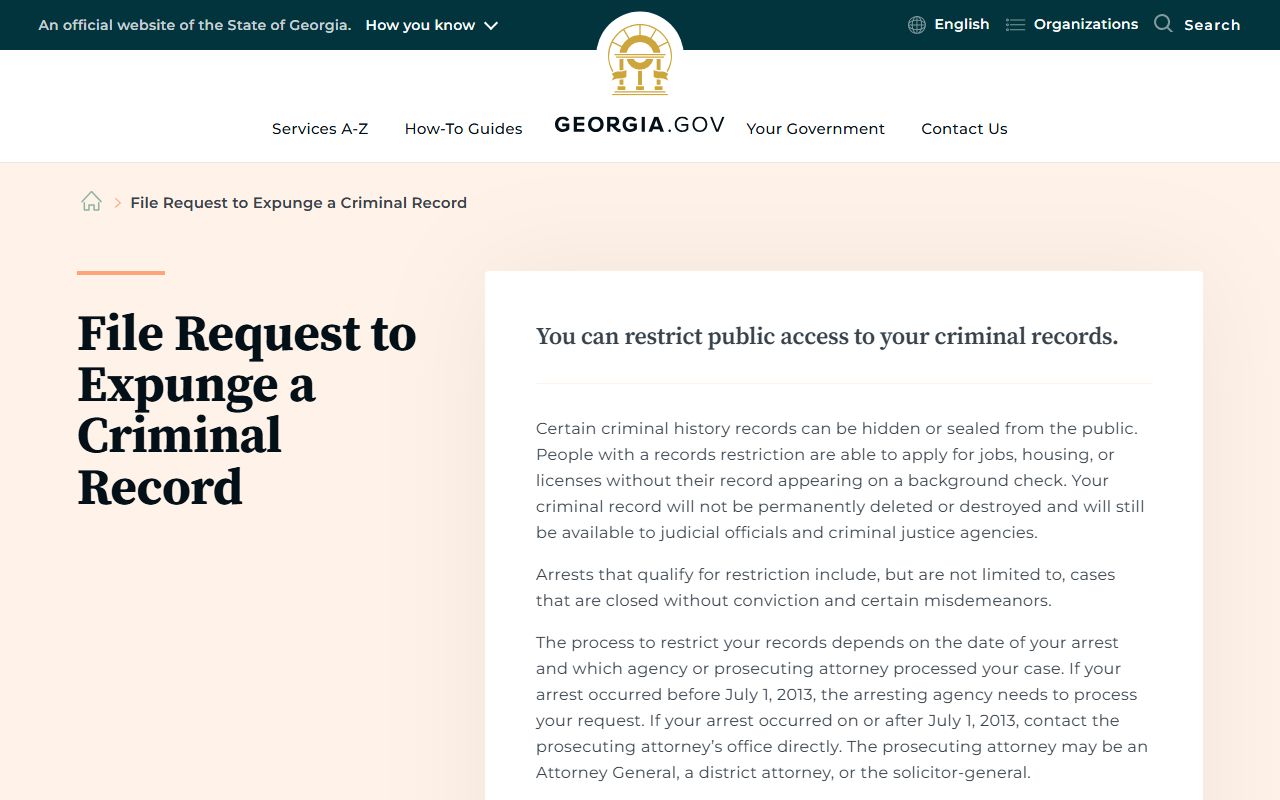
That state guide is the better source for eligibility concepts, while Chatham County court and prosecuting offices are the local sources for final dispositions, charging papers, and case-specific orders.
Certain Georgia laws create special limits. The conditional-discharge statute can restrict some drug records under listed conditions.
O.C.G.A. 16-13-2 addresses conditional discharge for certain drug matters.
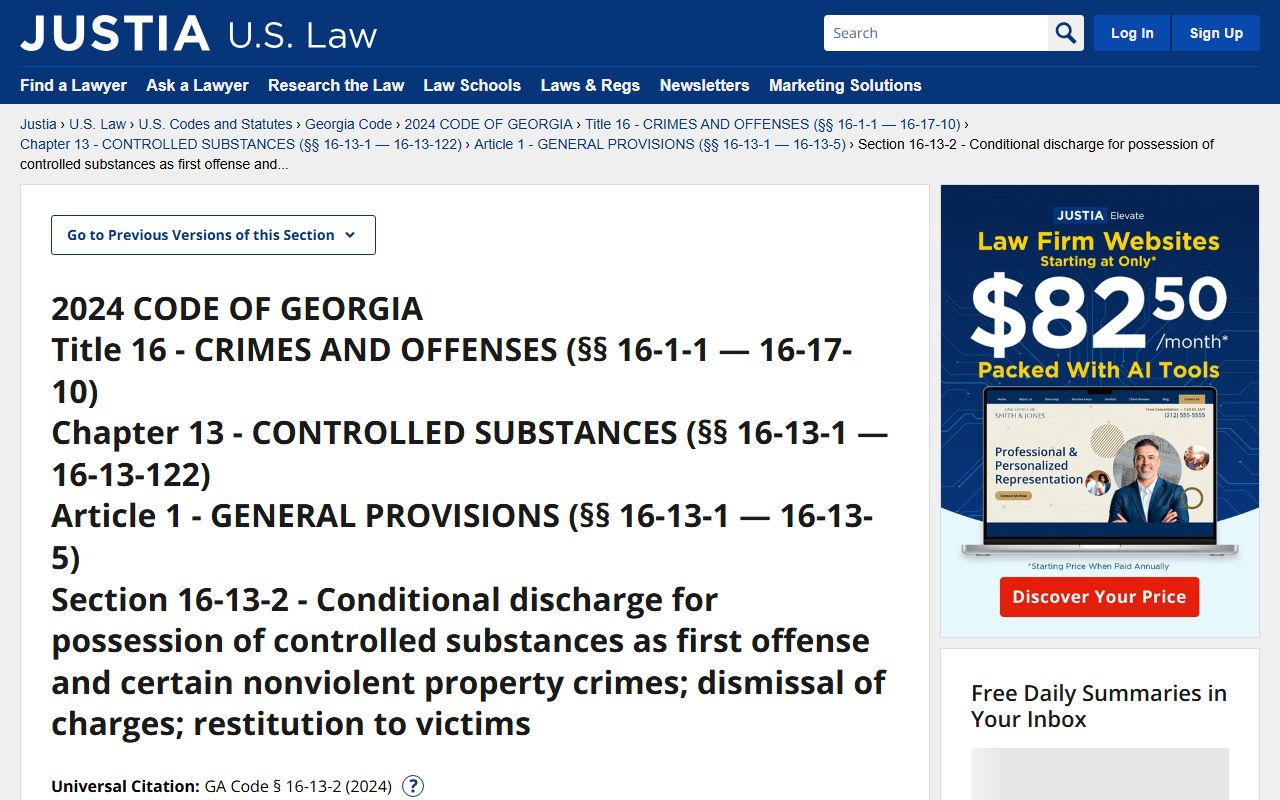
Because restrictions depend on the statute, sentence, charge, and final disposition, do not infer eligibility from a charge name alone.
Sealed vs Restricted Records
Georgia often uses the term record restriction rather than expungement. A restricted record is hidden from public view in eligible situations, but it is not destroyed. A sealed court record is also hidden from ordinary public access, usually by court order or by a statute that limits who can inspect it. Some records remain available to judges, clerks, prosecutors, law enforcement, and criminal justice agencies.
| Sealed | Restricted | |
|---|---|---|
| Public visibility | Hidden or limited by court order or law. | Limited from ordinary public criminal-history access when eligible. |
| Record status | The court file still exists, but access is controlled. | Georgia.gov says the record is not permanently deleted. |
| Official access | Judicial and authorized parties may retain access. | Judicial officials and criminal justice agencies may retain access. |
| Proof needed | Court order, statute, or party status may be required. | Eligibility depends on arrest date, disposition, agency, prosecutor review, and fees. |
Federal Criminal Records in Savannah
Federal criminal court records are not held by the Chatham County Clerk of Superior Court, State Court, Magistrate Court, or Recorder's Court. Chatham County is in the U.S. District Court for the Southern District of Georgia. Federal prosecutors, federal court staff, federal marshals, and federal electronic filing systems handle those cases, with public docket access through PACER.
The U.S. District Court for the Southern District of Georgia is the official federal trial-court source for the district.
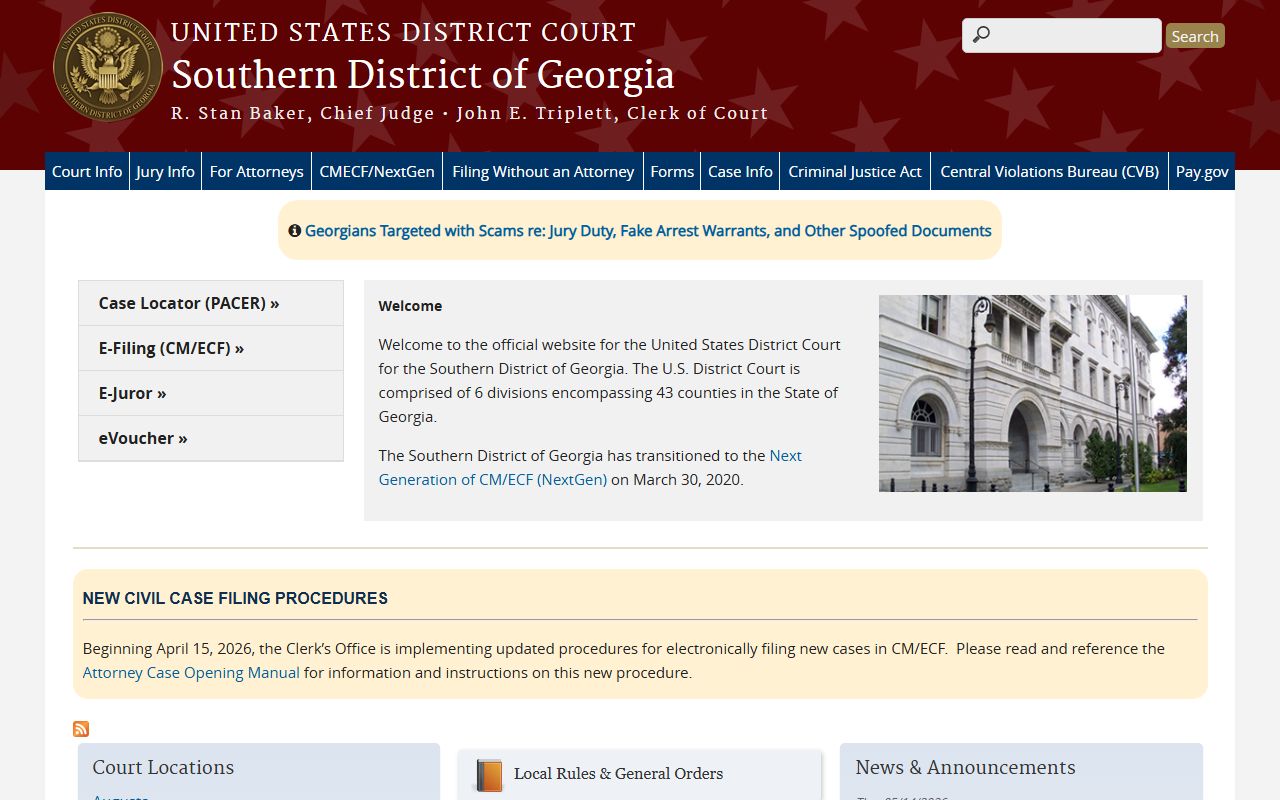
Use the federal court system when the case number, prosecutor, charge, or courthouse points to the Southern District rather than Chatham County trial courts.
Bankruptcy records are also federal, though they are not criminal court files.
The U.S. Bankruptcy Court for the Southern District of Georgia serves counties in southeast Georgia, including Savannah office coverage.
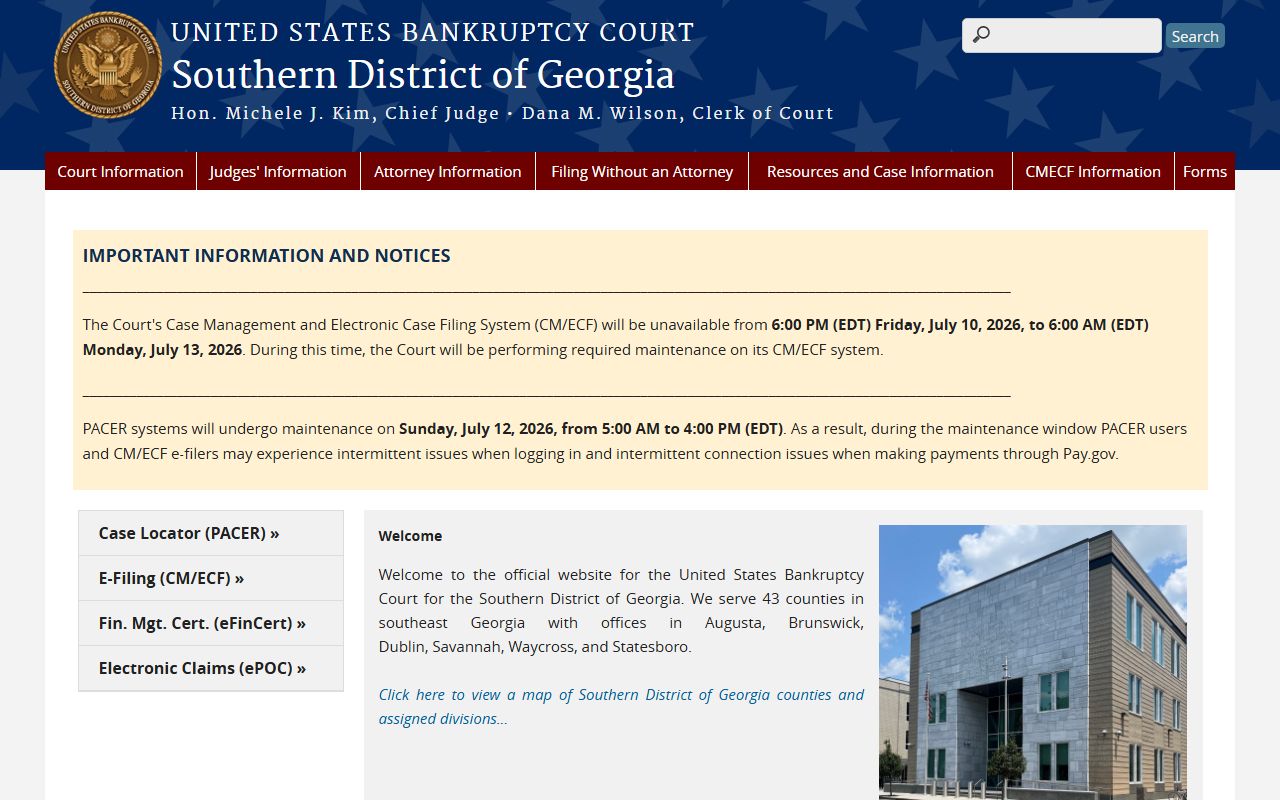
Bankruptcy searches belong in the federal bankruptcy system, while county criminal cases belong with Chatham County Superior, State, Recorder's, Magistrate, or municipal court channels.